Introduction
The technology industry has transformed dramatically over the past decade. Businesses are embracing cloud platforms, adopting Agile development, automating software delivery through DevOps, and relying on structured project management to execute digital transformation initiatives. If you’re planning to build a long-term IT career, learning only one technology is no longer enough.
Why These Four Skills Are Driving Modern IT Careers
Digital transformation projects require multiple teams working together. Developers write code, cloud engineers manage infrastructure, DevOps engineers automate deployments, Scrum Masters coordinate Agile teams, and Project Managers ensure projects meet business goals. This interconnected ecosystem has created a huge demand for professionals who understand more than just one specialization. Employers increasingly prefer candidates who can collaborate across departments, understand business objectives, and adapt to modern software delivery practices.
Start with Cloud Computing: Build a Strong Technical Foundation
Every modern application depends on cloud infrastructure. Whether it’s web applications, mobile platforms, AI solutions, or enterprise software, cloud services provide scalability, security, and flexibility. Enrolling in AWS courses in Chennai is an excellent first step for beginners and experienced professionals alike. These courses introduce cloud concepts, networking, storage, virtual machines, databases, security, and cloud architecture through practical, hands-on learning.
Understanding the AWS certification benefits is equally important. AWS certifications validate your cloud expertise, demonstrate practical knowledge to employers, and significantly improve your chances of landing roles such as Cloud Engineer, Solutions Architect, DevOps Engineer, or Cloud Consultant. Cloud skills form the technical backbone for professionals pursuing careers in DevOps and infrastructure management.
Agile: The Framework Behind Successful Software Delivery
Technology projects today are delivered using Agile methodologies instead of traditional waterfall approaches. Agile promotes flexibility, customer feedback, continuous improvement, and rapid software delivery through short development cycles. Professionals aiming to validate their Agile expertise should pursue the Best Agile Scrum Certification, which demonstrates industry-recognized knowledge of Scrum principles, Agile values, sprint planning, retrospectives, and stakeholder collaboration. Agile certifications not only improve technical understanding but also prepare professionals for leadership responsibilities within software development teams.
DevOps: Connecting Development with Operations
DevOps bridges the gap between software development and IT operations by automating processes, improving collaboration, and enabling continuous integration and continuous deployment (CI/CD). Cloud platforms and DevOps complement each other perfectly. Cloud infrastructure provides scalable environments, while DevOps ensures faster software delivery with minimal downtime.
Professionals with cloud expertise and Agile knowledge often transition smoothly into DevOps roles because they already understand collaboration, automation, and iterative development. Learning DevOps tools alongside cloud technologies creates additional career opportunities in automation, infrastructure engineering, release management, and site reliability engineering.
Project Management: Leading Teams Beyond Technology
Technical expertise alone doesn’t guarantee successful project delivery. Organizations also require professionals who can manage timelines, budgets, resources, stakeholders, risks, and business expectations. Pursuing the best online project management certificate helps professionals build structured project planning skills while offering the flexibility of remote learning.
For professionals seeking globally recognized credentials, enrolling in Best PMP training in Chennai provides comprehensive preparation for advanced project management practices. PMP training develops expertise in project planning, execution, monitoring, leadership, communication, and risk management.
Advance Your Career with Scrum Leadership
After gaining experience with Scrum fundamentals, professionals can further strengthen their leadership capabilities through Advanced scrum master training.
Advanced programs focus on scaling Agile across organizations, coaching multiple Scrum teams, managing organizational change, facilitating complex Agile transformations, and mentoring future Scrum Masters.
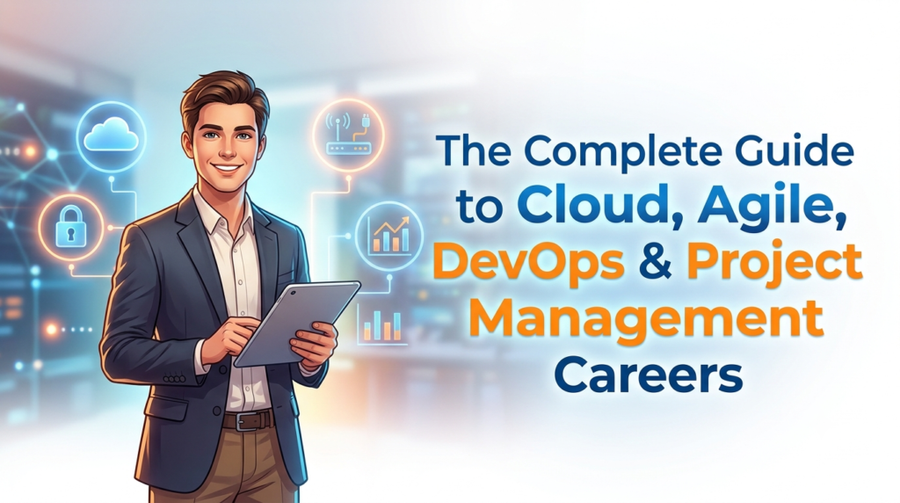
Complete Guide to Cloud, Agile, DevOps & Project Management
Difference Between Cloud, Agile, DevOps & Project Management
| Aspect | Cloud Computing | Agile | DevOps | Project Management |
| Primary Focus | Cloud infrastructure | Software delivery | Automation & deployment | Project execution |
| Main Objective | Host and manage applications | Deliver customer value quickly | Accelerate software releases | Complete projects successfully |
| Key Professional | Cloud Engineer | agile scrum master | DevOps Engineer | Project Manager |
| Popular Certification | AWS Certification | Best Agile Scrum Certification | DevOps Certifications | PMP Certification |
| Core Skills | Networking, Security, Architecture | Collaboration, Sprint Management | CI/CD, Automation | Planning, Budgeting, Leadership |
| Career Growth | Solutions Architect | Agile Coach | Site Reliability Engineer | Program Manager |
Conclusion
The future of IT belongs to professionals who continuously expand their skills across multiple disciplines. Cloud Computing provides the technical foundation, Agile ensures efficient collaboration, DevOps accelerates software delivery, and Project Management brings structure and leadership to every initiative. By investing in these complementary skills, professionals can unlock exciting career opportunities, improve earning potential, and stay relevant in an increasingly competitive technology landscape.
FAQ
1. Why should IT professionals learn Cloud, Agile, DevOps, and Project Management together?
These skills complement each other and prepare professionals for modern software development, infrastructure management, automation, and leadership roles.
2. What are the AWS certification benefits?
AWS certifications validate cloud expertise, improve employability, increase salary potential, and open opportunities in cloud-focused roles.
3. Who should pursue the Best Agile Scrum Certification?
Software developers, testers, business analysts, project coordinators, team leads, and aspiring Scrum Masters can all benefit from Scrum certification.
4. Is Advanced scrum master training suitable for experienced professionals?
Yes. It is designed for professionals who want to lead Agile transformations, coach teams, and manage enterprise-scale Scrum implementations.
5. Why choose Best PMP training in Chennai?
It provides structured preparation for PMP certification while helping professionals develop advanced project management and leadership skills.
6. Are AWS courses in Chennai suitable for beginners?
Yes. Most training programs begin with cloud fundamentals and gradually progress to advanced AWS services and practical implementation.
7. Is the best online project management certificate recognized by employers?
Many online project management certifications are widely accepted and help professionals demonstrate project planning and leadership capabilities.
8. Which certification should I complete first?
A practical sequence is Cloud Computing, AWS certification, Agile Scrum, DevOps fundamentals, Advanced Scrum, and finally Project Management or PMP certification.
Written by
Venkat Raman
Expert instructor and certified professional with extensive experience training working professionals for global certifications including PMP, AWS, CSM, and PSM.