Introduction
So you’ve heard the phrase thrown around in job postings, LinkedIn posts, and team meetings, and you’re wondering whether it’s worth chasing that title. Here’s the short answer: yes, if you enjoy solving people problems more than technical ones, and yes, if you want a career that pays well without requiring you to write a single line of code. This guide walks you through exactly what the certification involves, why it matters, and how to choose one that actually moves your career forward instead of just adding another line to your resume.
Why Companies Are Suddenly Obsessed With Scrum Masters
A decade ago, “project manager” was the go-to title for anyone coordinating a team. Today, that role has splintered, and the agile scrum master has become one of the most requested positions in tech, finance, healthcare, and even marketing departments. The reason is simple: teams that adopt agile frameworks ship products faster, adapt to changing requirements without falling apart, and waste less time in meetings that go nowhere.
But agile only works if someone actively removes obstacles, coaches the team on process, and shields developers from unnecessary interruptions. That someone is the scrum master. Unlike a traditional manager, this person doesn’t assign tasks or dictate deadlines — they facilitate. They ask questions like “what’s blocking you?” instead of “why isn’t this done yet?” That mindset shift is exactly what certification programs are built to teach.
What Actually Happens Inside a Certification Program
Most beginners assume certification is just a test you cram for over a weekend. It’s more nuanced than that. A solid program covers Scrum theory (the three pillars: transparency, inspection, adaptation), practical facilitation skills for ceremonies like sprint planning, daily stand-ups, sprint reviews, and retrospectives, plus real scenarios where you practice resolving team conflicts or handling a stakeholder who keeps changing requirements mid-sprint.
Courses typically run anywhere from two days of live instruction to several weeks of self-paced learning, followed by a proctored exam. Passing rates vary depending on the provider, but the exams generally test your ability to apply Scrum principles to messy, real-world situations rather than simply memorizing definitions.
The Real Benefits of Scrum Master Certification
Let’s talk numbers and outcomes, because that’s usually what people care about most. The benefits of scrum master certification go beyond a nicer job title. Certified professionals typically command higher starting salaries than uncertified peers doing similar work — often a 15 to 25 percent premium depending on region and industry. Recruiters also use certification as a fast filter; when hundreds of resumes flood in for one opening, a recognized credential gets you past the initial screening.
Beyond compensation, certification builds a shared vocabulary. When you say “impediment” or “velocity” or “definition of done,” certified colleagues instantly understand what you mean, which speeds up collaboration across teams and even across companies. It also signals to employers that you’ve been tested on structured problem-solving under a framework, not just picked up buzzwords from a podcast.
There’s a softer benefit too: confidence. Many first-time scrum masters feel like impostors in their early meetings, unsure whether they’re facilitating correctly or just talking. A structured certification program gives you a mental checklist and a community of practice to fall back on, which cuts down that learning curve significantly.
Finding the Best Agile Scrum Certification for Your Situation
Scrum Alliance’s Certified ScrumMaster (CSM) is the most widely recognized entry-level credential and requires attending a live course taught by a certified trainer, which makes it great if you learn better through discussion and role-play. Scrum.org’s Professional Scrum Master (PSM I) skips the mandatory training requirement, letting you self-study and take the exam whenever you’re ready, which suits disciplined self-learners on a tighter budget. PMI’s Agile Certified Practitioner (PMI-ACP) is broader, covering multiple agile frameworks beyond just Scrum, and works well for people who already hold a PMP and want to add agile credibility without starting from scratch.
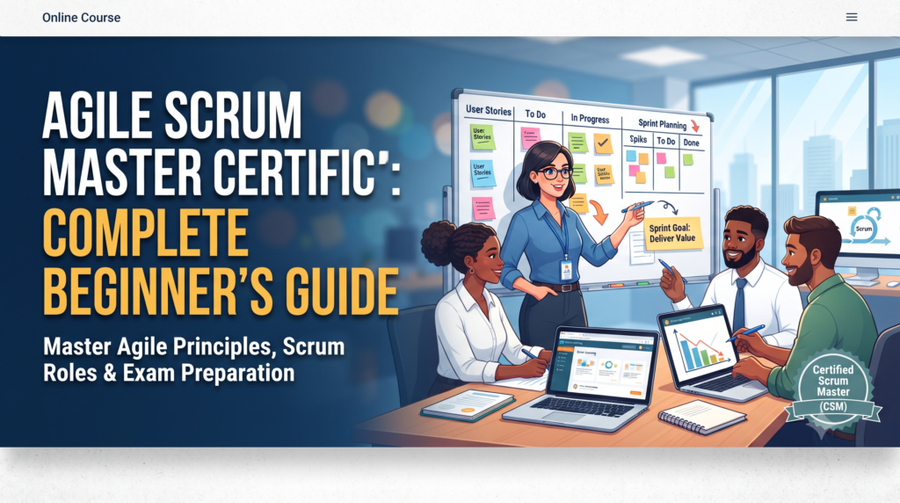
Master Agile Principles, Scrum Roles and Exam Preparation
Difference Between Popular Scrum Master Certifications
Certification | Provider | Training Required? | Best For | Approximate Cost |
CSM (Certified ScrumMaster) | Scrum Alliance | Yes, live course | Beginners who prefer instructor-led learning | $1,000–$1,500 |
PSM (Professional Scrum Master) | Scrum.org | No, self-paced | Self-motivated learners on a budget | $150–$500 |
PMI-ACP | Project Management Institute | Yes, agile project experience | Experienced PMs adding agile skills | $435–$700 |
SAFe Scrum Master | Scaled Agile Inc. | Yes, live course | Professionals in large enterprises using scaled agile | $795–$1,000 |
How to Prepare Without Wasting Weeks Studying
Preparation doesn’t need to consume your evenings for months. Start with the official Scrum Guide, which is free, short, and forms the backbone of nearly every exam question you’ll face. Follow that with a handful of practice exams to identify weak spots, then focus your remaining study time specifically on those gaps instead of re-reading material you already know.
Joining a study group or an online forum where other candidates share sample questions can also shave real time off your prep, since you learn from other people’s mistakes instead of only your own. And don’t underestimate hands-on practice — even volunteering to run a mock sprint retrospective with friends or coworkers cements concepts far better than passive reading ever will.
Turning Certification Into an Actual Career
Getting certified is the easy part; landing your first scrum master role is where most people stall. Start by looking internally at your current company — many organizations promote from within because they trust someone who already understands their culture and product, even if that person hasn’t held the title before. If that’s not an option, target smaller companies or startups first, since they’re often more willing to take a chance on a newly certified agile scrum master compared to large enterprises that demand years of hands-on experience.
Final Thoughts
Certification alone won’t make you a great scrum master — that comes from practice, empathy, and genuine curiosity about how teams work best together. But certification gives you the structured foundation, the credibility, and the vocabulary to get your foot in the door and start building that experience.
Written by
Aabiance Technology
Expert instructor and certified professional with extensive experience training working professionals for global certifications including PMP, AWS, CSM, and PSM.