Introduction
The IT industry in 2026 is evolving faster than ever. Cloud computing, artificial intelligence, cybersecurity, Agile delivery, and project management are reshaping how organizations build and manage technology solutions. For aspiring professionals and experienced employees alike, earning the right certifications has become one of the most effective ways to stay competitive and accelerate career growth. However, many learners make the mistake of collecting certifications without a clear strategy. A better approach is to follow a structured roadmap that builds knowledge step by step, allowing each certification to strengthen the next. This guide outlines a practical IT certification roadmap for beginners and experienced professionals, helping you choose the right learning sequence while maximizing career opportunities.
Why a Certification Roadmap Matters in 2026
Technology recruiters are no longer looking only for degrees or years of experience. They increasingly value professionals who can demonstrate verified skills through globally recognized certifications.
A structured certification roadmap offers several advantages:
- Builds knowledge progressively instead of randomly.
- Improves confidence through practical learning.
- Aligns skills with industry requirements.
- Enhances employability across multiple technology domains.
- Creates opportunities for promotions and higher salaries.
Whether your goal is becoming a Cloud Engineer, Scrum Master, Project Manager, or Technology Consultant, following a roadmap makes the learning journey more efficient.
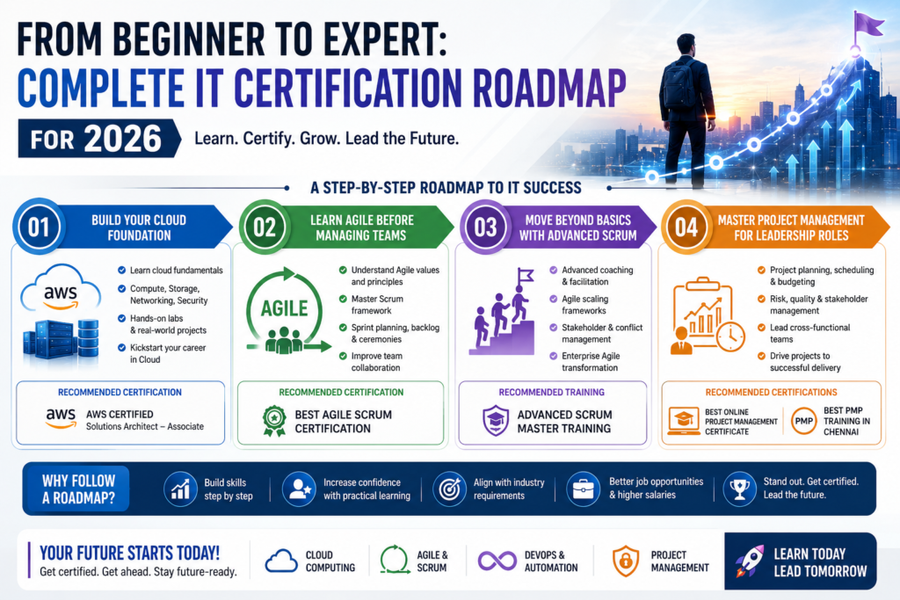
Stage 1: Build Your Cloud Computing Foundation
Every modern business relies on cloud platforms to host applications, manage data, and scale digital services. Cloud Computing is therefore an ideal starting point for anyone entering the IT industry. Enrolling in AWS courses in Chennai helps learners understand cloud fundamentals, virtual machines, storage, networking, security, databases, and cloud architecture. Hands-on labs and real-world projects provide practical exposure that employers value.
One of the biggest motivations for pursuing AWS certification is understanding. Certified professionals often enjoy better job opportunities, increased credibility, and access to high-demand roles such as Cloud Engineer, Solutions Architect, DevOps Engineer, and Cloud Administrator.
Stage 2: Learn Agile Before Managing Teams
Technical knowledge alone is no longer enough to deliver successful software projects. Modern organizations use Agile methodologies to improve collaboration, increase flexibility, and deliver software faster. An agile scrum master plays a central role in ensuring Agile teams remain productive by facilitating Scrum ceremonies, removing blockers, encouraging collaboration, and supporting continuous improvement. Professionals aiming to build credibility should pursue the Best Agile Scrum Certification, which validates knowledge of Scrum principles, Agile frameworks, sprint planning, backlog management, and team facilitation.
Complete IT Certification Roadmap for 2026
Stage 3: Move Beyond the Basics with Advanced Scrum Skills
Once Scrum fundamentals are mastered, professionals should continue developing leadership capabilities. Completing Advanced scrum master training equips learners with advanced coaching techniques, organizational change management, Agile scaling frameworks, stakeholder engagement, conflict resolution, and enterprise Agile transformation strategies. Advanced training prepares professionals for leadership positions such as Senior Scrum Master, Agile Coach, Delivery Lead, and Transformation Consultant. Rather than simply facilitating Scrum events, experienced Scrum Masters become mentors who help organizations improve Agile maturity and team performance.
Stage 4: Master Project Management for Leadership Roles
As careers progress, professionals often transition from technical responsibilities into leadership and strategic planning. Earning the best online project management certificate offers flexible learning while covering essential project management concepts, including planning, scheduling, budgeting, quality management, procurement, communication, and risk management. Professionals seeking classroom-based learning and internationally recognized credentials often choose Best PMP training in Chennai. PMP preparation develops practical leadership skills while preparing candidates for one of the world’s most respected project management certifications. Project management knowledge complements technical expertise and opens doors to roles involving cross-functional leadership and business decision-making.
Difference Between AWS, Scrum, and PMP Certifications
| Feature | AWS Certification | Scrum Certification | PMP Certification |
| Primary Focus | Cloud Computing | Agile Software Development | Project Management |
| Best For | Cloud Engineers | Scrum Masters | Project Managers |
| Core Skills | Cloud Infrastructure, Security, Architecture | Sprint Planning, Team Facilitation, Agile Practices | Planning, Budgeting, Risk Management |
| Career Roles | Solutions Architect, Cloud Engineer | agile scrum master, Agile Coach | Project Manager, Program Manager |
| Industry Demand | Very High | Very High | High Across Industries |
| Career Growth | Technical Leadership | Agile Leadership | Business & Strategic Leadership |
Complete IT Certification Roadmap for 2026
How These Certifications Complement Each Other
One of the biggest misconceptions is that Cloud Computing, Agile, and Project Management belong to different career paths. In reality, they work together in almost every modern organization. Cloud professionals build scalable infrastructure. Agile teams develop software efficiently. Scrum Masters coordinate collaboration. Project Managers oversee budgets, schedules, and business goals. Together, these skills create professionals who understand both technology and organizational leadership. Employers increasingly value candidates who possess a combination of technical expertise, Agile practices, and project management capabilities rather than specialization in only one area.
Conclusion
Building a successful IT career in 2026 requires more than learning a single technology. Professionals who follow a structured certification roadmap gain technical knowledge, leadership abilities, and practical skills that remain valuable throughout their careers. By investing in continuous learning and following the right certification sequence, you can confidently progress from beginner to expert while unlocking exciting opportunities across the IT industry.
FAQ
1. Why should I follow an IT certification roadmap instead of learning randomly?
A roadmap ensures that each certification builds on previous knowledge, making learning more structured and improving career progression.
2. What are the AWS certification benefits?
AWS certifications validate cloud skills, improve employability, increase salary potential, and open opportunities in cloud computing and DevOps roles.
3. Is the Best Agile Scrum Certification suitable for beginners?
Yes. It is ideal for software professionals, business analysts, testers, developers, and anyone interested in Agile project delivery.
4. Who should enroll in Advanced scrum master training?
Experienced Scrum Masters, Agile Coaches, Team Leads, and professionals leading Agile transformations benefit the most.
5. Why choose Best PMP training in Chennai?
It offers expert-led preparation for PMP certification while helping professionals build advanced project management and leadership skills.
6. Is the best online project management certificate recognized by employers?
Yes. Reputable online certifications are widely accepted and help professionals demonstrate project planning and leadership capabilities.
7. Are AWS courses in Chennai suitable for non-technical professionals?
Many beginner-friendly AWS courses cover cloud fundamentals, making them suitable for both technical and non-technical learners.
8. Which certification should I complete first?
Starting with Cloud Computing and AWS, followed by Scrum, Advanced Scrum, and Project Management, creates the strongest long-term career foundation.
Written by
Venkat Raman
Expert instructor and certified professional with extensive experience training working professionals for global certifications including PMP, AWS, CSM, and PSM.