Introduction
If you’ve ever typed “how do I start a career in cloud computing” into a search bar at midnight, you already know the answer everyone gives: get certified. But not just any certification; the AWS Solution Architect certification sits at the top of almost every recruiter’s wishlist right now, and for good reason. Companies aren’t just moving to the cloud anymore; they’re rebuilding their entire operations around it, and they need people who can design that infrastructure without it falling apart under real-world traffic.
Why Beginners Are Flocking to This Certification in 2026
Cloud adoption hasn’t slowed down; if anything, the shift toward hybrid and multi-cloud environments has made skilled architects even harder to find. Businesses running workloads across AWS need people who understand not just how services work individually, but how they fit together into secure, cost-efficient, scalable systems.
That’s exactly what the AWS Certified Solutions Architect credential validates. It tells employers you can look at a business requirement, say, “we need a website that can handle 10x traffic spikes during sales events,” and translate that into an actual architecture using EC2, load balancers, auto-scaling groups, and S3 without over-engineering or overspending. Beginners like this path because it doesn’t require years of coding experience first. A solid grasp of networking basics, some hands-on practice, and consistent study can get most people exam-ready in two to three months.
Breaking Down the Exam Structure Before You Panic
A lot of beginners overestimate how intimidating this exam is. Yes, it covers a wide range of services, but the questions are scenario-based rather than pure memorization. You’ll be given a business problem a company needs disaster recovery, or they want to reduce database latency for users in Europe and asked to pick the best architectural solution from four options.
The exam typically spans these core domains:
Notice a pattern? Nearly every domain revolves around design decisions, not raw technical trivia. That’s why hands-on labs matter more than flashcards here.
Building Your Study Roadmap Step by Step
Start with the free AWS Skill Builder digital courses if you want a structured baseline; they’re official, current, and won’t waste your time on outdated content. From there, layer in a paid course from a well-reviewed provider (Adrian Cantrill and Stephane Maarek’s courses are commonly recommended by people who’ve already passed) to fill in the gaps and add depth.
But here’s the part beginners skip: actually building things. Spin up a free-tier EC2 instance. Break it. Fix it. Set up a VPC with public and private subnets and trace how traffic flows through it. Create an S3 bucket with lifecycle policies. None of this needs to cost money if you stay within free-tier limits, and this hands-on repetition is what turns theoretical knowledge into exam-day confidence.
Practice exams deserve their own mention here. Tools like Tutorials Dojo or Jon Bonso’s practice tests are almost universally praised because they mimic the real exam’s difficulty and explain why wrong answers are wrong, which matters more than just knowing the right answer.
Understanding the Real-World Value Behind the Exam Fee
People sometimes hesitate at the exam cost, wondering if it’s worth it. Let’s put that into perspective with actual outcomes people report after certifying.
The most commonly cited AWS certification benefits include higher starting salaries in cloud roles, faster interview callbacks, and maybe most importantly for career switchers, a credential that proves competence even without years of prior IT experience on your resume. Recruiters use certifications as a filtering signal when they’re sorting through hundreds of applications, and having this one on your LinkedIn profile alone increases the odds your resume gets a second look.
There’s also an internal benefit that doesn’t show up on a resume: confidence in technical conversations. Once you understand how AWS services interact, you stop nodding along in meetings and start contributing actual architectural opinions.
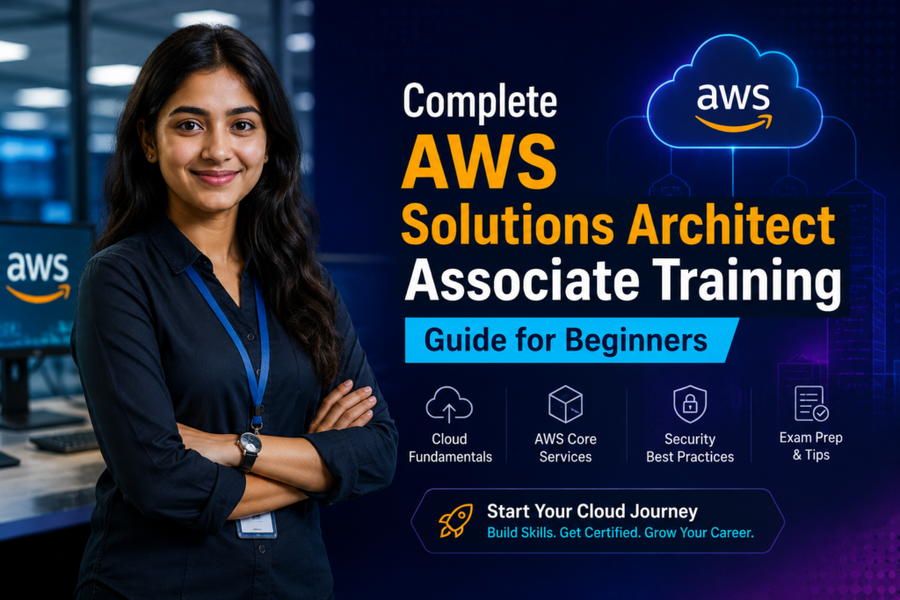
Complete AWS Solutions Architect Associate Training Guide for Beginners
Associate vs Professional: Knowing Where You Actually Stand
| Aspect | Solutions Architect Associate | Solutions Architect Professional |
| Ideal for | Beginners with 6+ months cloud exposure | Experienced architects (2+ years) |
| Exam focus | Core architecture design principles | Complex, multi-account, enterprise-scale design |
| Difficulty | Moderate | High |
| Prerequisite | None officially required | Associate-level knowledge strongly recommended |
| Typical prep time | 2–3 months | 4–6 months |
| Career impact | Entry into cloud architecture roles | Senior architect, consulting, leadership roles |
Most people should not skip straight to Professional. The Associate exam builds foundational thinking patterns cost optimization, fault tolerance, security layering that the Professional exam assumes you already have internalized.
Common Mistakes That Slow Beginners Down
A surprising number of people fail their first attempt not because they didn’t study enough, but because they studied the wrong way: passively watching videos without ever touching the AWS console. Others underestimate the security and networking domains, assuming compute and storage services matter more, when in reality IAM policies, VPC design, and encryption choices show up constantly throughout the exam.
Another mistake is ignoring cost-related questions. AWS wants architects who don’t just build something that works, but something that works efficiently. Questions often present two technically valid solutions where only one makes financial sense, and picking the cheaper, smarter option is exactly the skill this exam is testing for.
Your Next Move After Certification
Passing the exam isn’t the finish line; it’s the entry ticket. Once certified, start applying what you’ve learned to real projects, whether that’s a personal portfolio project, freelance cloud consulting, or an internal migration project at your current job. Employers increasingly want to see applied experience alongside the badge, and nothing demonstrates that better than a documented project showing your architectural decision-making in action.
If you’re serious about a long-term cloud career, treat this certification as chapter one, not the whole book. Many professionals move on to specialty certifications in security, networking, or machine learning once they’ve built confidence with the associate-level fundamentals.
Final Thoughts
Earning the AWS Solution Architect certification is one of the most practical, high-return investments you can make in your tech career right now. It doesn’t demand years of prior coding background; it rewards hands-on curiosity over rote memorization, and it opens doors across industries that are all racing to modernize their infrastructure. Start with the fundamentals, get your hands dirty in the AWS console, lean on quality practice exams, and permit yourself to take it one domain at a time. The certification is achievable, and the career doors it opens are very real.
FAQ
- How long does it take to prepare for the AWS Solutions Architect Associate exam? Most beginners need 8 to 12 weeks of consistent study, roughly 8–10 hours per week, combining video courses with hands-on labs and practice tests.
- Do I need coding experience to pass this certification?
No. This exam focuses on architectural design decisions rather than programming skills, so basic technical curiosity and cloud fundamentals matter more than coding ability.
- What is the passing score for the AWS Solutions Architect Associate exam?
AWS uses a scaled scoring system, and candidates typically need around 720 out of 1000 points to pass, though AWS doesn’t publish an exact fixed percentage.
- Is the AWS Solutions Architect Associate certification worth it in 2026?
Yes. Cloud adoption continues rising across industries, and this certification remains one of the most recognized entry points into cloud architecture roles, backed by strong hiring demand.
- What jobs can I get after becoming an AWS Certified Solutions Architect?
Common roles include cloud engineer, solutions architect, DevOps engineer, and infrastructure consultant, often with noticeably higher starting salaries than non-certified peers.
- How much does the AWS Solutions Architect Associate exam cost?
The exam fee is typically around $150 USD, though pricing can vary slightly by region and occasional promotional discounts.
- Can I retake the exam if I fail on my first attempt?
Yes, candidates can retake the exam after a 14-day waiting period, and many successful candidates use their first attempt’s feedback to focus their second round of studying.
- What’s the difference between AWS Solutions Architect Associate and Professional certifications?
The Associate level focuses on core design principles for beginners, while the Professional level tests complex, enterprise-scale architectural scenarios meant for experienced practitioners.
Written by
Venkat Raman
Expert instructor and certified professional with extensive experience training working professionals for global certifications including PMP, AWS, CSM, and PSM.