Introduction
If you’ve been searching for a career move that combines steady demand, strong pay, and genuine influence over how teams work, training to become an agile scrum master deserves a serious look. Companies across banking, healthcare, retail, and tech are hiring scrum masters faster than they can train them internally, which means the right certification can open doors within weeks of finishing your course, not years.
Why Organizations Can’t Stop Hiring Scrum Masters
Walk into any product-driven company today and you’ll find scrum masters sitting at the center of daily standups, sprint planning, and retrospectives. Their job isn’t just running meetings it’s removing blockers, coaching teams toward self-organization, and protecting the sprint from constant scope creep. As more organizations shift from rigid waterfall processes to iterative, feedback-driven delivery, the demand for someone who understands both the mechanics and the mindset of agile has exploded.
This is exactly why becoming an agile scrum master has turned into one of the most reliable entry points into project and product leadership. You don’t need a computer science degree or a decade of managerial experience. You need structured training, a recognized certification, and the willingness to practice the framework in real project settings.
What Separates a Good Training Program From a Great One
Not all courses labeled “scrum master training” deliver the same value. A mediocre program hands you slides and a practice test. A great one puts you through simulated sprints, case studies from real product teams, and mock certification exams that mirror the actual exam pattern.
When evaluating options, look for these markers of quality:
- Live instructor-led sessions rather than pre-recorded videos only
- Access to real sprint boards, backlogs, and burndown charts for hands-on practice
- Mentorship from someone who has actually worked as a scrum master, not just taught theory
- A clear path toward globally recognized certifications like CSM (Certified ScrumMaster) or PSM (Professional Scrum Master)
Programs that check all four boxes tend to produce candidates who pass their certification exam on the first attempt and, more importantly, can actually function in the role once hired.
The Real Benefits of Scrum Master Certification
People often assume certification is just a formality; the benefits of scrum master certification show up in very concrete ways once you start job hunting or angling for a promotion.
First, it signals credibility. Hiring managers scanning hundreds of resumes use certification as a quick filter it tells them you’ve invested time in understanding the framework rather than picking up buzzwords from a blog post.
Second, certified scrum masters typically command 15–25% higher starting salaries compared to uncertified candidates applying for similar roles, according to multiple industry salary surveys. Third, certification gives you a shared vocabulary with agile coaches, product owners, and delivery managers, which speeds up your onboarding into any new team.
Finally, and this one gets overlooked often, the benefits of scrum master certification extend into your personal working style. You start facilitating meetings more efficiently, communicating blockers earlier, and managing conflict within teams with far more confidence skills that translate well beyond just scrum roles.
Choosing the Best Agile Scrum Certification for Your Career Stage
Beginners and working professionals shouldn’t approach certification the same way, and this is where a lot of people waste time and money.
If you’re a beginner with little to no project experience, start with a foundational course that explains the scrum framework, roles, ceremonies, and artifacts before jumping into an exam. Certifications like the PSM I (Professional Scrum Master I) from Scrum.org are exam-only, affordable, and well-suited for someone building a base.
If you’re a working professional already exposed to project execution, you might benefit more from the CSM (Certified ScrumMaster) from Scrum Alliance, which requires a mandatory instructor-led course. This format works well for professionals who learn better through live discussion and peer interaction rather than self-study.
Choosing the best agile scrum certification ultimately depends on your learning style, budget, and how quickly you need the credential for a job application or internal promotion.
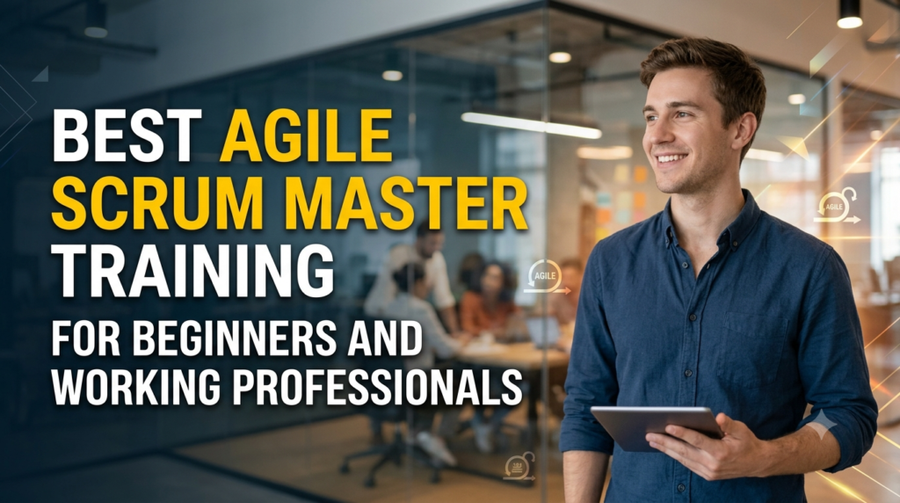
Best Agile Scrum Master Training for Beginners and Working Professionals
Difference Between CSM, PSM, and SAFe Certifications
Feature | CSM (Scrum Alliance) | PSM (Scrum.org) | SAFe Scrum Master |
Training requirement | Mandatory 2-day live course | Optional, self-study allowed | Mandatory instructor-led course |
Exam difficulty | Moderate | Higher, stricter passing score | Moderate |
Renewal required | Yes, every 2 years | No, lifetime validity | Yes, annually |
Best suited for | Beginners wanting guided learning | Self-motivated learners | Enterprise-scale agile teams |
Average cost | Moderate to high | Lower | Moderate |
Global recognition | Very high | Very high | Growing rapidly in large enterprises |
This comparison matters because the certification you choose shapes how employers perceive your training, and some enterprises specifically prefer SAFe-certified candidates for scaled agile environments involving multiple teams.
Building Practical Experience Alongside Your Certification
A certificate alone won’t make you job-ready. Pair your training with practical exposure: volunteer to run a mock sprint for a college project, shadow a scrum master at your current workplace, or join open-source agile communities where teams practice scrum ceremonies virtually. Recruiters increasingly ask scenario-based interview questions like “how would you handle a team member consistently missing sprint commitments,” and only hands-on exposure prepares you to answer these convincingly.
Working professionals transitioning from roles like business analysis, QA, or software development often have a natural advantage here, since they’ve already witnessed scrum ceremonies from the inside, even if they weren’t leading them.
Where This Career Path Is Heading
Agile isn’t slowing down. Hybrid and remote teams have made structured facilitation more valuable, not less, because coordinating a distributed team through sprints requires deliberate communication that scrum masters are trained to provide. Many scrum masters eventually move into agile coach, product owner, or delivery manager roles, meaning your initial certification often functions as a launchpad rather than a final destination.
Final Thoughts
Becoming a certified agile scrum master isn’t about memorizing terminology for an exam; it’s about learning to guide teams through uncertainty with structure and empathy. Whether you’re just starting or pivoting mid-career, choosing the best agile scrum certification paired with a training program that emphasizes real practice will set you apart in a crowded job market. The benefits of scrum master certification compound over time, showing up in your salary, your confidence, and the trust your teams place in you.
FAQ
- Do I need a technical background to become a scrum master?
No. Scrum masters come from diverse backgrounds including business, marketing, HR, and operations. What matters more is strong facilitation and communication skills.
- How long does scrum master training typically take?
Most beginner-level courses run between 2 to 4 days for live sessions, though self-paced study for exam-only certifications can take a few weeks depending on your schedule.
- Which certification is better for beginners, CSM or PSM?
CSM offers structured live learning ideal for those new to agile, while PSM suits self-motivated learners comfortable with independent study.
- Can working professionals pursue certification while employed full-time?
Yes, most reputable programs offer weekend or evening batches specifically designed for working professionals.
- Is scrum master certification worth it without prior project experience?
Yes, certification builds foundational knowledge, and many entry-level scrum roles are open to freshers with the right credential and demonstrated understanding.
- What salary can a certified scrum master expect?
Salaries vary by region and experience, but certified professionals generally earn noticeably more than uncertified peers in comparable roles.
- How often do scrum master certifications need renewal?
This depends on the certifying body; some require renewal every one to two years, while others offer lifetime validity.
- What comes after becoming a scrum master?
Many professionals progress into agile coaching, product ownership, or program management roles after gaining a few years of scrum master experience.
Written by
Venkat Raman
Expert instructor and certified professional with extensive experience training working professionals for global certifications including PMP, AWS, CSM, and PSM.