Introduction
Cloud adoption keeps growing, and companies across India are hiring people who can design systems that are secure, reliable, and cost-efficient. If you want to become an AWS Solutions Architect, the path is clear, but it rewards steady practice more than shortcuts. This guide walks you through the skills, certifications, and habits that help you build a lasting career, with practical pointers for learners in Chennai.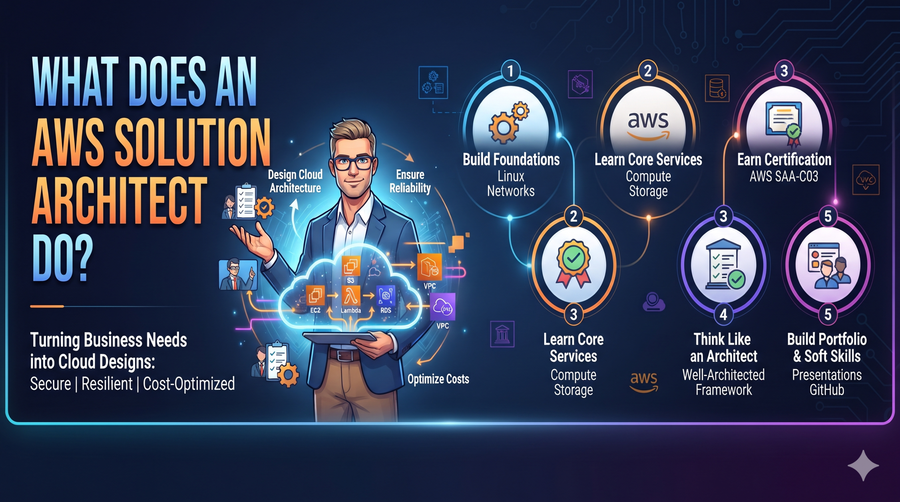
What Does an AWS Solution Architect Do?
An AWS Solution Architect turns business needs into working cloud designs. You decide which services to use, how data flows between them, how the system survives failures, and how to keep monthly bills under control. A typical week may include reviewing a migration plan, choosing between database options, explaining a design to a client, and fixing a weak point in security. It is a role that mixes technical depth with clear communication.
Step 1: Build Strong Foundations
Before touching advanced services, make sure the basics are solid. Learn how networks work (IP addressing, DNS, firewalls), get comfortable with Linux commands, and understand how databases and web applications fit together. A little scripting in Python or Bash helps you automate repetitive tasks. If you already understand cloud computing concepts such as scalability, high availability, and pay-as-you-go pricing, you will pick up AWS much faster.
Step 2: Learn Core AWS Services by Doing
Reading alone will not make you an architect. Open a free-tier account and build small projects. Start with the services that appear in almost every design:
- Compute: EC2, Lambda, and container services such as ECS and EKS
- Storage: S3, EBS and EFS
- Databases: RDS, Aurora and DynamoDB
- Networking: VPC, Route 53, CloudFront, and load balancers
- Security: IAM, KMS and AWS Organizations
- Monitoring: CloudWatch and CloudTrail
Try launching a three-tier web application, then break it on purpose and see how you can make it recover. Always set billing alerts so practice does not turn into an unexpected bill.
Step 3: Earn the Right AWS Certification
An AWS certification proves your knowledge to employers and gives your study a clear target. For most beginners, the best starting point is AWS Certified Solutions Architect – Associate (exam code SAA-C03). The exam has 65 questions, runs for 130 minutes and needs a score of 720 out of 1000 to pass. The exam fee is currently USD 150, and the credential stays valid for three years. Always confirm the latest details on the official AWS website before booking, because fees and policies can change.
To prepare for the AWS Solutions Architect Associate exam, focus on its four areas: designing secure, resilient, high-performing and cost-optimised architectures. Questions are scenario-based, so memorising service names is not enough. You need to explain why one design beats another. Once you pass, you can aim for the Solutions Architect Professional level, which also renews your associate credential.
Step 4: Think Like an Architect
Good architects follow the AWS Well-Architected Framework. Use its pillars as a checklist for every design you create: operational excellence, security, reliability, performance efficiency, cost optimisation and sustainability. Practise by reading AWS reference architectures and asking questions. What happens if this Availability Zone fails? Who can access this data? Can this workload run cheaper with a different pricing model? Writing down your answers builds the habit of defending design choices, which is exactly what interviews and client meetings demand.
Step 5: Build a Portfolio and Soft Skills
Employers want proof that you can apply what you know. Document two or three projects on GitHub, such as a serverless API, a static website with a content delivery network, or a disaster-recovery setup across regions. Add a simple architecture diagram and a short explanation for each. Alongside technical work, improve your communication: practise presenting designs to non-technical people, estimate costs clearly and write short design documents. These skills often separate a good engineer from a trusted architect.
 .
Why Chennai Is a Great Place to Start
Chennai has one of the strongest IT job markets in Tamil Nadu. Searching for AWS training in Chennai will show many options, so compare the syllabus, lab access, trainer experience and placement support before you decide.
How Aabiance Technology Can Support Your Journey
At Aabiance Technology in Chennai, the focus is on practical learning. A good preparation plan includes live lab sessions, guided projects, mock exams and interview practice, so you move from theory to real design work. Learners can follow a structured path, from cloud basics to core AWS services, exam preparation and project work, at a pace that suits students, working professionals and career switchers across Chennai.
Career Growth and Salary Outlook
AWS Solution Architect roles exist at several levels. Many professionals begin as cloud support associates or cloud engineers, move into associate architect positions, and later become senior architects, consultants or cloud leads. Salaries in India vary widely by experience, company and skills, so check current job listings for a realistic range. What stays constant is that certified professionals with hands-on project experience tend to stand out.
Quick Preparation Checklist
- Strengthen networking, Linux and database basics
- Practise on a free-tier account every week
- Study the official SAA-C03 exam guide and take timed mock tests
- Apply the Well-Architected Framework to every project
- Publish projects with diagrams on GitHub
- Follow new AWS announcements every quarter
Conclusion
Becoming an AWS Solution Architect is a step-by-step journey: build your foundations, practise on real services, earn your certification and keep designing. Start small, stay consistent and learn from every project. With the right guidance in Chennai and steady effort, a rewarding cloud career is well within reach.