Introduction
Modern businesses are rapidly moving toward Agile Project Management methodologies to improve flexibility, accelerate project delivery, and respond faster to customer demands. As organizations continue investing in Agile transformation, the demand for skilled Agile Project Managers is growing significantly worldwide.
Agile Project Managers help organizations:
- Deliver projects faster
- Improve team collaboration
- Reduce project risks
- Enhance customer satisfaction
- Support digital transformation
- Increase business agility
Professionals with Agile Leadership Skills and Project Management Expertise are now among the highest-paid leaders in technology and enterprise operations.
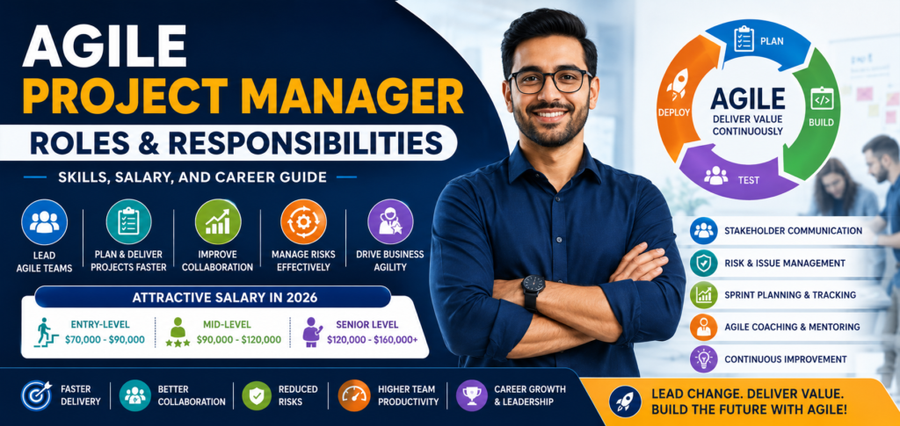
What Is an Agile Project Manager?
An Agile Project Manager is responsible for planning, managing, and delivering projects using Agile methodologies.
Unlike traditional project managers who follow rigid project structures, Agile Project Managers focus on adaptability, collaboration, continuous improvement, and iterative delivery.
They work closely with:
- Scrum teams
- Product owners
- Stakeholders
- Developers
- Business analysts
- Enterprise leadership teams
Agile Project Managers ensure teams remain productive while delivering high-quality outcomes aligned with business goals.
Their expertise in Agile Delivery Management, Sprint Planning, and Stakeholder Management helps organizations achieve successful project outcomes.
Why Agile Project Managers Are in High Demand
Organizations are shifting from traditional project management to Agile delivery models because Agile offers:
- Faster product releases
- Better customer feedback integration
- Improved flexibility
- Reduced operational risks
- Higher team productivity
- Continuous innovation
As Agile adoption grows globally, companies actively seek certified Agile Professionals capable of managing dynamic project environments.
The growing need for Digital Transformation Leadership and Enterprise Agile Transformation is further increasing demand for Agile Project Managers.
Key Roles and Responsibilities of an Agile Project Manager
Agile Project Managers handle both leadership responsibilities and project execution activities.
- Project Planning and Delivery
Agile Project Managers create project roadmaps, define goals, and ensure successful sprint execution.
Responsibilities Include
- Sprint planning
- Task prioritization
- Resource allocation
- Timeline management
- Delivery tracking
- Risk assessment
They ensure projects remain aligned with organizational objectives and customer requirements.
Strong knowledge of Project Planning, Agile Project Delivery, and Project Execution Management is essential for success.
- Managing Agile Teams
One of the most important responsibilities is leading Agile teams effectively.
Team Management Activities
- Facilitating Agile ceremonies
- Conducting daily stand-ups
- Encouraging collaboration
- Resolving conflicts
- Improving team productivity
- Supporting continuous improvement
Strong communication and leadership skills are critical for managing Agile teams successfully.
Professionals with excellent Team Leadership Skills, Agile Coaching, and Collaboration Management capabilities are highly valued.
- Agile Process Implementation
Agile Project Managers ensure teams follow Agile frameworks and best practices.
Common Agile Methodologies Used
- Scrum
- Kanban
- SAFe
- Lean Agile
- Hybrid Project Management
They help organizations implement Agile transformation strategies while improving workflow efficiency.
Experience in Agile Process Implementation, Scrum Project Management, and Lean Agile Practices is increasingly important in modern workplaces.
Ready to Start Your Agile Project Management Training Journey? Reach Out Today
- Stakeholder Communication
Agile leaders regularly communicate project progress, risks, and updates to stakeholders.
Key Communication Responsibilities
- Status reporting
- Stakeholder meetings
- Requirement clarification
- Risk communication
- Performance reporting
Effective communication helps maintain transparency and alignment across teams.
Strong Stakeholder Management Skills and Business Communication abilities help Agile Project Managers build trust and drive project success.
- Risk and Issue Management
Managing project risks proactively is a critical responsibility.
Risk Management Activities
- Identifying project risks
- Monitoring dependencies
- Resolving blockers
- Managing budget concerns
- Preventing project delays
Agile Project Managers help teams adapt quickly to changing project conditions.
Expertise in Risk Management, Issue Resolution, and Project Governance ensures smoother project execution.
- Supporting Agile Transformation
Many organizations hire Agile professionals to support enterprise-wide digital transformation initiatives.
Transformation Responsibilities
- Agile coaching
- Team mentoring
- Process optimization
- Change management
- Agile maturity improvement
Agile Project Managers often work closely with leadership teams during organizational modernization projects.
Their role in Enterprise Agile Transformation, Change Management, and Business Agility has become increasingly strategic.
Agile Project Manager Salary in 2026
Agile Project Managers are among the highest-paid professionals in the project management and technology industries.
Average Salary by Experience Level
Entry-Level Agile Project Manager
$70,000 – $90,000
Mid-Level Agile Project Manager
$90,000 – $120,000
Senior Agile Project Manager
$120,000 – $160,000+
Professionals with advanced Agile Certifications, Leadership Skills, and Project Management Experience often command premium salaries.
Agile Project Manager Career Path
Agile project management offers strong long-term career growth opportunities.
Common Career Progression
- Project Coordinator
- Scrum Master
- Agile Project Manager
- Senior Agile Project Manager
- Agile Coach
- Program Manager
- Enterprise Agile Transformation Lead
Professionals can also transition into leadership and consulting roles.
A strong foundation in Agile Career Development and Project Leadership can accelerate career advancement.
Ready to Start Your Agile Career Development Journey? Reach Out Today
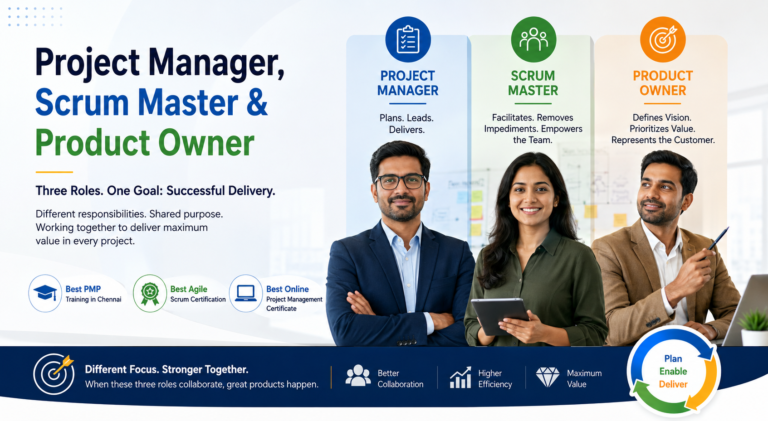
Difference Between Agile Project Manager and Scrum Master
Although both roles support Agile teams, there are important differences.
Agile Project Manager
- Focuses on overall project delivery
- Handles stakeholder communication
- Manages risks and budgets
- Oversees project timelines
- Works across multiple teams
Scrum Master
- Focuses on Scrum process facilitation
- Supports Scrum team productivity
- Removes team blockers
- Facilitates Agile ceremonies
- Usually works with one Scrum team
In many organizations, Agile Project Managers and Scrum Masters collaborate closely.
Understanding the distinction between Agile Project Manager vs Scrum Master is important when choosing a career path.
Why Companies Prefer Agile Project Managers
Organizations prefer Agile Project Managers because they help:
- Improve project delivery speed
- Increase team efficiency
- Enhance collaboration
- Reduce project failures
- Improve customer satisfaction
- Support continuous innovation
Agile leadership is becoming essential for businesses undergoing digital transformation.
Companies value professionals who can combine Agile Leadership, Project Management Skills, and Business Agility.
How to Become an Agile Project Manager
Step 1: Learn Agile Fundamentals
Understand Scrum, Kanban, Lean Agile, and Agile principles.
Step 2: Gain Project Management Experience
Work on team coordination and project delivery activities.
Step 3: Earn Agile Certifications
Certifications improve credibility and career opportunities.
Popular certifications include:
- Certified ScrumMaster (CSM)
- Professional Scrum Master (PSM)
- PMI Agile Certified Practitioner (PMI-ACP)
- SAFe Agilist
Step 4: Learn Agile Tools
Gain hands-on experience with:
- Jira
- Trello
- Azure DevOps
- Asana
Step 5: Build Leadership Skills
Develop communication, coaching, and stakeholder management abilities.
Mastering Agile Tools, Agile Certifications, and Leadership Development significantly improves career prospects.
Future of Agile Project Management
The future of Agile project management is strongly connected to:
- AI-powered project management
- Cloud-based collaboration
- Enterprise Agile transformation
- Hybrid project delivery
- Remote Agile teams
- Intelligent workflow automation
Organizations will continue investing in Agile Transformation, AI in Project Management, and Digital Project Delivery to improve innovation and business agility.
Conclusion
Agile Project Managers play a critical role in helping organizations deliver projects faster, improve collaboration, and support digital transformation initiatives. With businesses increasingly adopting Agile Project Management, Scrum Methodology, Kanban Framework, Hybrid Project Management, and Enterprise Agile Transformation, the demand for skilled Agile professionals continues to rise across industries worldwide. Professionals with Agile Certifications, Leadership Capabilities, Stakeholder Management Skills, and recognized project management expertise can access excellent career opportunities, higher salaries, and long-term professional growth. Whether you are starting your project management journey or advancing your leadership career, becoming an Agile Project Manager can open doors to some of the most rewarding and high-paying roles in modern business environments.
Written by
Venkat Raman
Expert instructor and certified professional with extensive experience training working professionals for global certifications including PMP, AWS, CSM, and PSM.