Introduction
The demand for Agile professionals has grown rapidly as organizations across IT, banking, healthcare, manufacturing, and startups embrace Agile methodologies to deliver projects faster and more efficiently. Among the most sought-after roles in Agile teams is the professional responsible for guiding teams, removing roadblocks, and ensuring Agile practices are followed effectively.
If you’re planning to enter project management or transition from software development, testing, business analysis, or operations, becoming a Scrum Master can be a rewarding career choice. The role combines leadership, communication, problem-solving, and Agile expertise without requiring extensive programming skills. This guide explains everything beginners need to know—from understanding the role to choosing the Best Agile Scrum Certification, building practical experience, and advancing your career.
Who Is a Scrum Master?
A Scrum Master is a servant leader who helps Agile teams work efficiently using the Scrum framework. Rather than managing people directly, the Scrum Master supports collaboration, facilitates Scrum events, removes obstacles, and encourages continuous improvement.
An agile scrum master ensures that the Scrum process is properly implemented while helping product owners and development teams achieve their goals. They also coach organizations on Agile values and foster a culture of transparency and accountability.
As more companies adopt Agile delivery models, skilled Scrum Masters are becoming valuable assets in organizations worldwide.
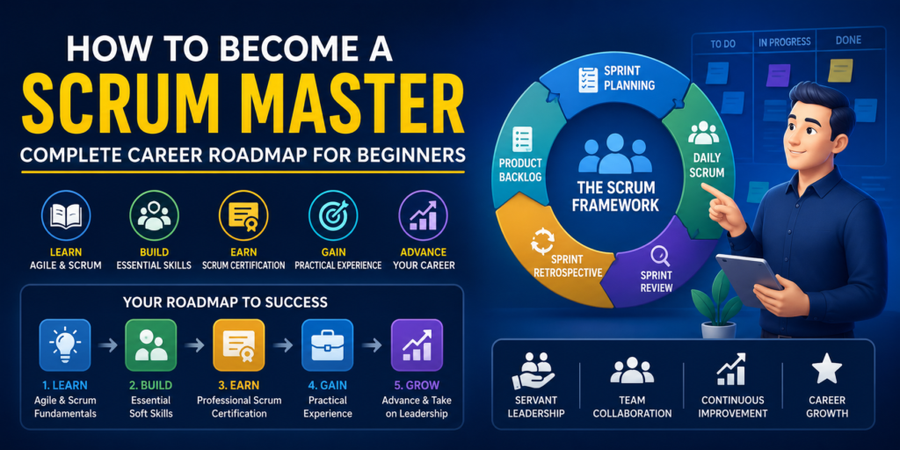
Step-by-Step Roadmap to Become a Scrum Master
1. Learn Agile and Scrum Fundamentals
Before pursuing certifications, understand the basics of Agile principles, Scrum values, roles, ceremonies, and artifacts. Learning topics such as Sprint Planning, Daily Scrum, Sprint Review, Retrospectives, Product Backlog, and Sprint Backlog creates a strong foundation.
This knowledge helps you understand how Agile teams deliver value continuously.
2. Build Essential Soft Skills
Technical knowledge alone isn’t enough. Successful Scrum Masters possess excellent communication, leadership, facilitation, conflict resolution, coaching, and stakeholder management skills.
These interpersonal abilities enable Scrum Masters to guide teams through challenges while maintaining productivity.
3. Earn a Professional Scrum Certification
Obtaining an industry-recognized certification validates your knowledge and improves your employability. Many professionals begin with the Best Agile Scrum Certification to demonstrate their understanding of Scrum principles.
Choosing a globally respected certification also helps recruiters identify qualified candidates quickly.
4. Gain Practical Experience
Apply Scrum concepts by participating in Agile projects, internships, or simulated team environments. Even if you’re currently working in QA, development, support, or project coordination, volunteering in Agile initiatives helps build valuable experience.
Hands-on practice strengthens your confidence far more than theory alone.
5. Continue Learning
As your experience grows, consider enrolling in Advanced scrum master training to develop coaching, scaling, facilitation, and Agile transformation skills.
Skills Every Scrum Master Should Develop
A successful Scrum Master combines technical understanding with people management skills.
Some of the most valuable competencies include:
- Agile and Scrum methodologies
- Leadership and coaching
- Facilitation techniques
- Risk management
- Conflict resolution
- Team motivation
- Stakeholder communication
- Continuous improvement mindset
- Time management
- Problem-solving abilities
These skills help Scrum Masters create productive, collaborative, and self-organizing teams.
How to Become a Scrum Master: Complete Career Roadmap for Beginners
Scrum Master vs Project Manager
Feature | Scrum Master | Project Manager |
| Primary Focus | Agile team facilitation | Overall project delivery |
| Leadership Style | Servant leadership | Direct management |
| Methodology | Scrum and Agile | Traditional and Agile |
| Team Structure | Self-organizing teams | Managed teams |
| Success Measurement | Team efficiency and value delivery | Scope, budget, and schedule |
Although both roles involve leadership, Scrum Masters focus more on enabling teams than on directing them.
Why Scrum Master Certification Matters
Many employers prefer certified professionals because certifications validate practical knowledge and commitment to Agile practices.
Some major benefits of scrum master certification include:
- Better job opportunities
- Higher salary potential
- Increased professional credibility
- Strong understanding of Agile frameworks
- Global career opportunities
- Improved leadership capabilities
- Greater confidence during interviews
These benefits of scrum master certification make professional training a worthwhile investment for career growth.
Choosing the Right Scrum Master Training
Selecting the right learning path is essential for long-term success. Look for programs that combine instructor-led learning, practical exercises, mock Scrum sessions, real-world case studies, certification preparation, and placement assistance.
Professionals searching for agile scrum master certification in Chennai often prefer classroom and live online training that includes industry projects and experienced mentors.
Likewise, learners looking for a scrum master course in Pune can benefit from institutes offering hands-on Scrum simulations and certification-focused coaching.
Candidates interested in CSM Certification in Chennai should compare course curriculum, trainer expertise, success rate, and post-training support before enrolling.
Working professionals in western India are attending CSM training in Mumbai to gain practical exposure while balancing their job responsibilities.
Those specifically searching for a Certified Scrum Master certification in Chennai should ensure the training aligns with globally recognized certification standards and includes exam preparation support.
Career Opportunities After Becoming a Scrum Master
Certified Scrum Masters can explore opportunities across multiple industries, including software development, banking, healthcare, fintech, telecommunications, manufacturing, logistics, and consulting.
Common career roles include:
- Scrum Master
- Senior Scrum Master
- Agile Project Manager
- Agile Coach
- Delivery Manager
- Release Train Engineer
- Product Delivery Lead
As organizations continue their Agile transformation journeys, demand for certified professionals continues to rise.
Conclusion
A Scrum Master career offers an excellent opportunity for professionals who enjoy collaboration, leadership, and continuous learning. With the right combination of Agile knowledge, communication skills, practical experience, and professional certification, beginners can build a successful career in Agile project delivery.
Whether you’re considering the Best Agile Scrum Certification, planning to pursue advanced Scrum Master Certification in Chennai, or investing in quality training, these can significantly improve your career prospects. As Agile adoption continues to expand globally, skilled Scrum Masters will remain among the most valuable professionals in modern organizations.
Written by
Venkat Raman
Expert instructor and certified professional with extensive experience training working professionals for global certifications including PMP, AWS, CSM, and PSM.