As Agile adoption continues to grow across industries, professionals from all backgrounds are looking to upskill. One of the most recognized certifications for beginners is the Certified ScrumMaster (CSM) certification. For those with no Agile experience, CSM serves as a structured entry point into the world of Scrum and Agile practices.
In this guide, we’ll explore whether CSM is worth it for beginners, what you’ll learn, career benefits, and the certification process.
What Is the Certified ScrumMaster (CSM) Certification?
The CSM certification is an entry-level Scrum Master certification offered by Scrum Alliance, a globally recognized nonprofit organization focused on Agile education.
It validates your knowledge in:
- Scrum principles and framework
- Agile values and mindset
- Team collaboration and facilitation
- Servant leadership and coaching
Unlike exams-only certifications, CSM emphasizes interactive learning and real-world application, making it perfect for beginners with no prior Agile experience.
Key Features of CSM Certification
- Beginner-friendly: No prior Agile or Scrum experience required
- Mandatory 16-hour instructor-led training (online or in-person)
- Focus on real-world Scrum application
- Globally recognized by recruiters and organizations
- Suitable for career switchers, fresh graduates, and team leads
Why CSM Works for Beginners
CSM bridges the gap between theory and practice. Agile principles can feel abstract to newcomers, but CSM translates them into actionable skills for Scrum teams.
Ideal for beginners including:
- Fresh graduates
- Career switchers
- Business analysts
- QA professionals
Managers and project coordinators
Who Should Take CSM Certification?
CSM is highly relevant for professionals entering Agile teams or transitioning to Scrum roles.
Ideal candidates include:
- Business analysts supporting Agile teams
- Developers and engineers new to Scrum
- QA and testing professionals
- Product managers and product owners
- Fresh graduates exploring project delivery careers
It acts as a career entry point into Agile, rather than an advanced specialization.
Job Market Relevance of CSM Certification
Agile and Scrum adoption has expanded across industries like:
- Technology & IT
- Finance & banking
- Healthcare
- Manufacturing
- Marketing & operations
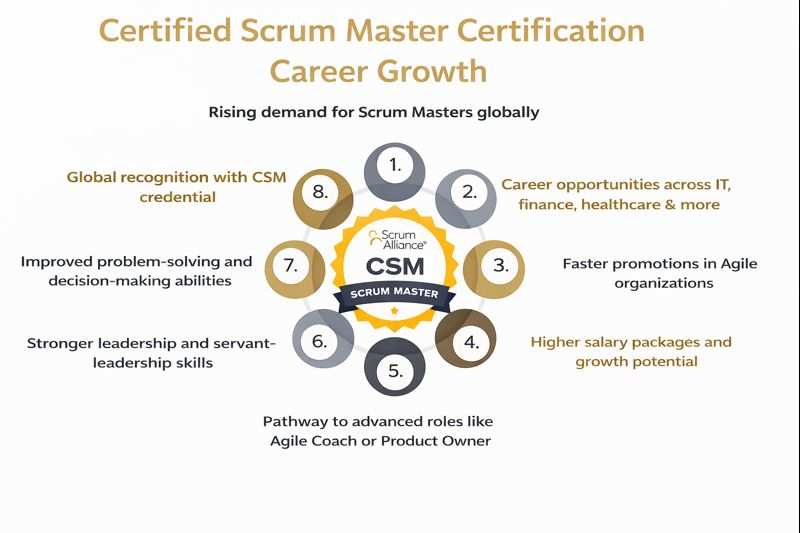
Employers look for candidates with Scrum knowledge, and CSM gives beginners a globally recognized credential that helps them get shortlisted for entry-level Scrum roles.
The Real Role of a Scrum Master
Many beginners assume a Scrum Master is a project manager. This is incorrect.
A Scrum Master’s role focuses on:
- Facilitating Scrum events
- Coaching teams on Agile practices
- Removing process or organizational impediments
- Supporting self-organizing teams
- Promoting collaboration, transparency, and continuous improvement
CSM teaches leadership through influence and facilitation, not authority.
Limitations Beginners Should Consider
- Certification Alone Is Not a Job Guarantee: Employers also value hands-on application, communication, and problem-solving skills.
- Ongoing Renewal: CSM certification requires renewal every 2 years through Scrum Education Units (SEUs).
- Continuous Learning: CSM is the foundation—continuous practice and experience are required for career growth.
How to Get CSM Certification (Beginner-Friendly)
- Attend a 16-hour instructor-led CSM training
- Receive exam access from Scrum Alliance
- Pass the online exam (minimum score 74%)
- Certification valid for 2 years
The exam is beginner-friendly, making it achievable for first-time Agile learners.
Final Verdict: Is CSM Worth It for Beginners?
Yes, with realistic expectations.
CSM is valuable when approached as:
- A structured entry into Agile and Scrum
- A credibility booster for career transitions
- A foundation for long-term Agile growth
It may not be worth it if you expect certification alone to guarantee a job, or if you prefer traditional, command-and-control roles.
Conclusion
For beginners with no Agile experience, CSM certification remains one of the best ways to enter the Agile ecosystem. It combines guided learning, real-world applicability, and global recognition—equipping professionals with the foundation needed to thrive in Scrum teams.
When paired with practice and continuous learning, CSM can accelerate your Agile career and open doors to entry-level Scrum roles across industries.
FAQ
Is CSM certification worth it for beginners with no Agile experience?
Yes. CSM is designed as an entry-level certification and does not require prior Agile or Scrum experience. It provides structured, instructor-led learning that helps beginners understand Scrum fundamentals and Agile principles in practical contexts.
Do I need Agile or Scrum experience before taking CSM?
No. There are no prerequisites. CSM is intended for individuals new to Agile, including fresh graduates, career switchers, and professionals transitioning from traditional project environments.
What does CSM certification teach beginners?
CSM teaches Agile values, Scrum roles, events, artifacts, servant leadership, team collaboration, planning techniques, and continuous improvement practices. The focus is on practical application rather than theory alone.
Is CSM an entry-level Agile certification?
Yes. CSM is considered one of the most widely recognized entry-level Agile certifications globally and is often used as a starting point for Agile and Scrum careers.
Does CSM certification guarantee a job?
No. CSM improves credibility and shortlisting chances but does not guarantee employment. Employers also evaluate practical experience, communication skills, and the ability to apply Agile principles in real scenarios.
Who should consider CSM certification?
CSM is suitable for beginners such as business analysts, developers, QA professionals, managers, product professionals, career switchers, and graduates seeking to enter Agile environments.
How difficult is the CSM exam for beginners?
The exam difficulty is beginner to moderate. Candidates who attend the mandatory training and review Scrum concepts generally find the exam manageable.
How does CSM help career switchers?
CSM provides a structured introduction to Agile and Scrum, helping career switchers understand team dynamics, Agile roles, and modern delivery practices, which supports smoother transitions into Agile roles.
Is CSM better than self-study for beginners?
For beginners, instructor-led CSM training is often more effective than self-study because it includes real-world examples, discussions, and guidance from experienced practitioners.
What roles can beginners target after CSM?
Beginners commonly target roles such as junior Scrum Master, Agile team member, project coordinator, business analyst in Agile teams, or supporting roles within Scrum environments.
Is CSM still relevant despite many Agile certifications?
Yes. Despite the growing number of Agile certifications, CSM remains relevant due to its global recognition, beginner-friendly structure, and strong alignment with Scrum adoption in organizations.
Should beginners choose CSM as their first Agile certification?
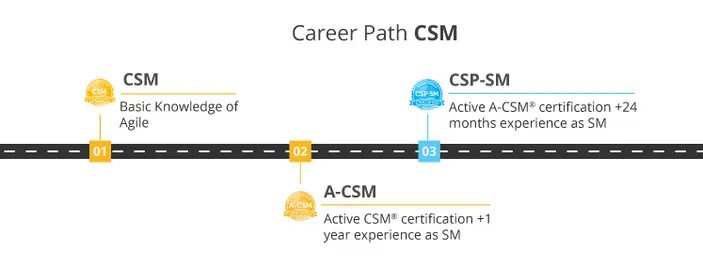
Yes. CSM is widely considered a suitable first Agile certification because it establishes foundational knowledge and provides a pathway to advanced certifications like A-CSM and CSP.
Written by
Venkat Raman
Expert instructor and certified professional with extensive experience training working professionals for global certifications including PMP, AWS, CSM, and PSM.