Introduction
AWS Fundamentals is the ideal starting point for anyone looking to understand cloud computing or build a successful career in the cloud domain. Whether you are a student, software developer, system administrator, IT professional, or business owner, mastering Cloud Computing, Core AWS Services, AWS Architecture, and AWS Security provides the technical foundation needed to work with modern cloud environments. As organizations continue migrating their workloads to AWS, professionals with cloud expertise are in high demand across sectors such as finance, healthcare, retail, manufacturing, education, and government.
Getting Started with AWS Fundamentals: A Complete Overview
Understanding AWS Fundamentals begins with learning how cloud computing works and why it has become the preferred choice for businesses worldwide. Cloud computing allows organizations to access computing resources such as servers, databases, storage, networking, analytics, and software over the internet instead of investing in expensive physical infrastructure. This on-demand approach enables businesses to scale resources based on their requirements while paying only for the services they use. Amazon Web Services offers a comprehensive cloud ecosystem supported by a global network of Regions and Availability Zones, ensuring high availability, fault tolerance, and low latency for applications. One of the key concepts covered in AWS Fundamentals is the AWS Shared Responsibility Model, which explains how AWS manages the security of the cloud infrastructure while customers remain responsible for securing their applications, data, and configurations.
Another important aspect of AWS Fundamentals is understanding cloud deployment models, including Public Cloud, Private Cloud, Hybrid Cloud, and Multi-Cloud environments. Learners also explore cloud service models such as Infrastructure as a Service (IaaS), Platform as a Service (PaaS), and Software as a Service (SaaS). These concepts help professionals choose the right cloud solutions based on business requirements and technical objectives. Developing a strong understanding of AWS Fundamentals provides the knowledge needed and prepares learners for advanced certifications and real-world cloud projects.
Inside AWS: Core Cloud Services That Power Modern Businesses
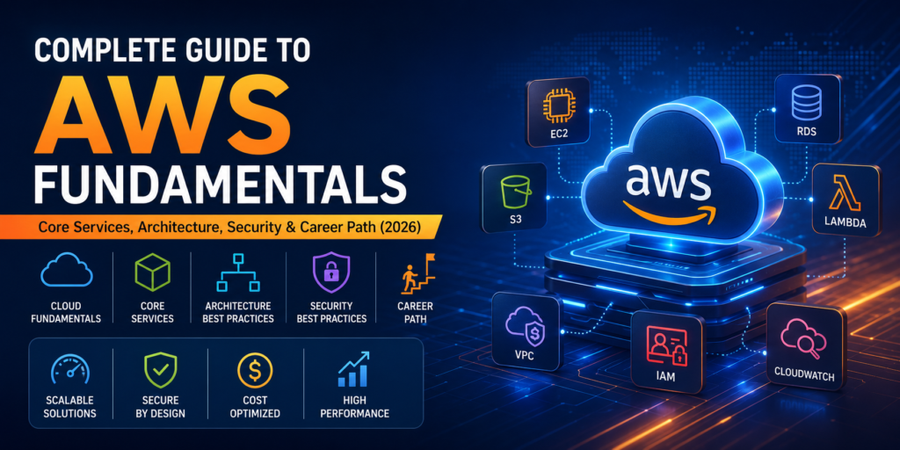
One of the strengths of Amazon Web Services is its extensive portfolio of cloud solutions designed to simplify application development, infrastructure management, data storage, and business operations. Understanding Core AWS Services is essential for anyone planning to work with AWS. Amazon EC2 (Elastic Compute Cloud) enables users to launch virtual servers in minutes, providing scalable computing power for hosting applications. Amazon S3 (Simple Storage Service) offers highly durable and secure object storage for files, backups, and multimedia content. Amazon RDS simplifies relational database management by automating routine administrative tasks such as backups, software updates, and scaling.
Networking services such as Amazon VPC allow organizations to create isolated cloud environments with customized networking configurations, while Elastic Load Balancer distributes application traffic across multiple servers to improve availability and performance. AWS Lambda introduces serverless computing, allowing developers to execute code without provisioning or managing servers, making application deployment faster and more cost-effective. Additional Core AWS Services include Amazon CloudWatch for monitoring system performance, AWS IAM for identity and access management, Amazon EBS for block storage, Amazon Route 53 for DNS management, and Amazon CloudFront for global content delivery.
AWS Architecture Framework: Designing Reliable, Scalable, and Cost-Effective Cloud Solutions
A well-designed AWS Architecture ensures that cloud applications remain secure, highly available, scalable, and optimized for performance. AWS provides the Well-Architected Framework, which helps organizations follow industry best practices while designing cloud environments. The framework focuses on six key pillars: Operational Excellence, Security, Reliability, Performance Efficiency, Cost Optimization, and Sustainability. These principles guide architects in creating solutions that can handle fluctuating workloads while maintaining high performance and minimizing operational risks.
An effective AWS Architecture incorporates Elastic Load Balancing to distribute workloads efficiently and Multi-AZ deployments to improve fault tolerance. Disaster recovery strategies such as automated backups, cross-region replication, and failover mechanisms further enhance business continuity. Cost optimization is another essential component of AWS Architecture. Organizations can reduce cloud expenses by selecting appropriate pricing models, rightsizing resources, implementing Reserved Instances, and using monitoring tools to identify unused infrastructure. By following architectural best practices, businesses can maximize performance while controlling operational costs.
Complete Guide to Cloud Computing, Core Services, Architecture, Security & Career Path
Strengthening Cloud Protection with AWS Security Best Practices
As businesses increasingly move sensitive workloads to the cloud, implementing strong AWS Security measures becomes critical. AWS follows a security-first approach by providing multiple layers of protection designed to safeguard cloud infrastructure, applications, and customer data. Identity and Access Management (IAM) enables organizations to control user permissions using role-based access control and least-privilege principles. AWS Key Management Service (KMS) provides encryption capabilities to protect sensitive information both at rest and in transit. AWS CloudTrail records API activity, allowing organizations to audit user actions and maintain compliance.
Advanced AWS Security services such as AWS Shield protect applications from Distributed Denial-of-Service (DDoS) attacks, while AWS Web Application Firewall (WAF) helps defend web applications against common online threats. Amazon GuardDuty continuously monitors cloud environments for suspicious activity, and AWS Security Hub centralizes security findings from multiple AWS services into a unified dashboard. Organizations are encouraged to implement security best practices, including enabling Multi-Factor Authentication (MFA), regularly updating access permissions, encrypting sensitive data, monitoring cloud resources, and conducting periodic security assessments. Mastering AWS Security ensures businesses maintain regulatory compliance while protecting valuable digital assets from evolving cyber threats.
Cloud computing continues to be one of the fastest-growing technology sectors, making AWS expertise a valuable asset for professionals worldwide. Building a successful AWS Career Path begins with learning AWS Fundamentals, followed by gaining hands-on experience through practical projects and earning globally recognized AWS certifications.
Professionals can start with entry-level certifications before progressing to specialized credentials in cloud architecture, DevOps, security, machine learning, networking, and data analytics. Practical experience using the AWS Free Tier, creating cloud-based applications, and working on deployment projects significantly enhances employability. As organizations continue investing in digital transformation, professionals following a structured AWS Career Path benefit from competitive salaries, excellent career progression, global employment opportunities, and continuous learning in one of the most innovative areas of technology.
Conclusion
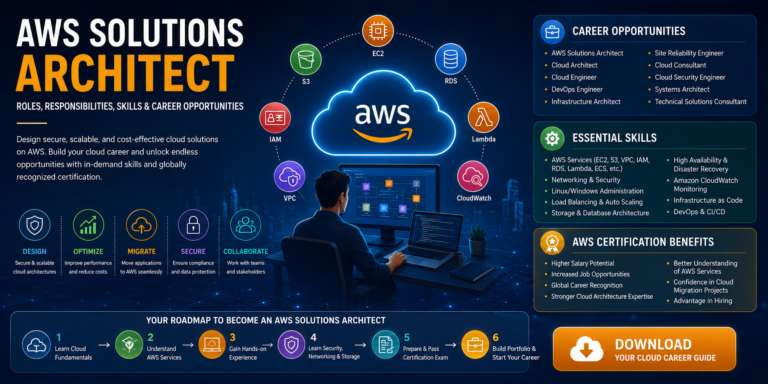
Building expertise in AWS Fundamentals is the foundation for a successful career in cloud computing. By understanding the principles of Cloud Computing, mastering Core AWS Services, learning modern AWS Architecture, implementing effective AWS Security practices, and following a structured AWS Career Path, professionals can develop the knowledge and practical skills needed to thrive in today’s cloud-first world. As AWS continues to lead the global cloud market in 2026, investing time in learning its technologies not only enhances technical capabilities but also opens the door to diverse, high-paying career opportunities across industries. Whether your goal is to become a Cloud Engineer, AWS Solutions Architect, DevOps Engineer, or Cloud Security Specialist, mastering AWS is a valuable investment in your future.
FAQ
1. What are AWS Fundamentals, and why are they important?
AWS Fundamentals introduces the essential concepts of cloud computing, AWS infrastructure, core services, networking, security, and pricing. They provide the foundation required to work confidently with Amazon Web Services.
2. Which Core AWS Services should every beginner learn?
Beginners should focus on Core AWS Services such as Amazon EC2, Amazon S3, Amazon RDS, AWS Lambda, Amazon VPC, AWS IAM, Amazon CloudWatch, and Elastic Load Balancer, as these services are widely used in cloud environments.
3. Why is AWS Architecture important for businesses?
A well-designed AWS Architecture improves application scalability, reliability, performance, disaster recovery, and cost optimization while ensuring business continuity and operational efficiency.
4. How does AWS Security help protect cloud environments?
AWS Security provides identity management, encryption, threat detection, auditing, firewalls, and compliance tools that help organizations secure cloud infrastructure, applications, and sensitive data.
5. What is the best AWS Career Path for beginners in 2026?
The recommended AWS Career Path starts with learning AWS Fundamentals, practicing with the AWS Free Tier, earning an AWS certification, building real-world projects, and progressing into roles such as Cloud Engineer, AWS Solutions Architect, DevOps Engineer, or Cloud Security Engineer.
Written by
Venkat Raman
Expert instructor and certified professional with extensive experience training working professionals for global certifications including PMP, AWS, CSM, and PSM.